
Free gifts vs. discounts: what works better?
When a free gift beats a percentage off, and how progressive gifts push shoppers to the bigger bundle.
Read articleQuantity breaks, mix & match and free gifts: the offers that get shoppers to add more to their cart, and how to price them.

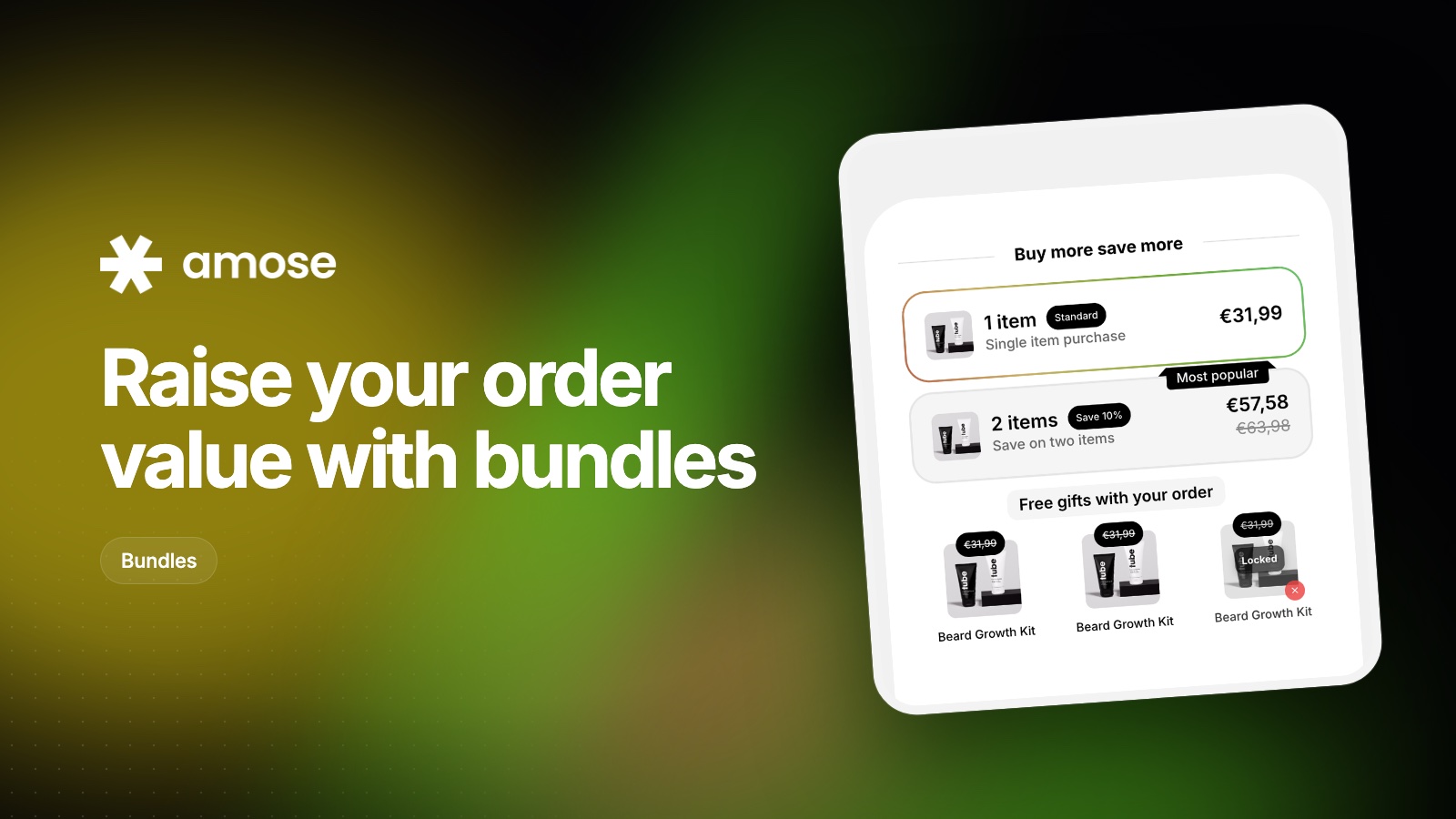
Getting a new visitor to your store is the expensive part. Once they are on a product page and ready to buy, asking them to take one more unit or one more product costs you almost nothing. A good bundle turns that moment into a bigger order without adding a single extra step to checkout.
Bundles also make the decision easier. Instead of asking "how many should I buy?", the shopper compares three clear options and picks one. Less thinking, more buying.
Not every product should be sold the same way. Start from how customers use what you sell:
| Format | Works best for | Example |
|---|---|---|
| Quantity breaks | Consumables and products people reorder | 1 serum, 2 for -10%, 3 for -20% |
| Mix & match | Ranges with flavors, colors or scents | Pick any 3 candles for a fixed price |
| BOGO | Low-cost items and clearance | Buy one, get the second at -50% |
| Bundle builder | Routines and kits | Build your own skincare routine |
| Free gift | Premium products where discounts hurt the brand | Buy 2, get a travel size free |
When you show too many options, shoppers hesitate. When you show only one, there is nothing to compare. Three offers give the right balance:
Most shoppers don't optimize, they follow the option you recommend. Make that option the one that is good for them and good for your margin.
Start from your real cost per order, including shipping and payment fees. A second unit often costs you much less to ship than the first, which is exactly where your room for a discount comes from.
If a discount feels too aggressive for your brand, replace it with a free gift on the top offer. The perceived value is often higher than the cost of the gift.
In Amose Bundle, Cart & Upsell, create a bundle, choose the format, add your offers and link it to your products. The offer block appears on the product page, matches your theme and updates the price as shoppers switch offers. The full walkthrough is in our tutorials.
Give each test at least two weeks and look at three numbers together: average order value, conversion rate and revenue per visitor. A bundle that raises order value but lowers conversion can still be a win, revenue per visitor tells you if it is.
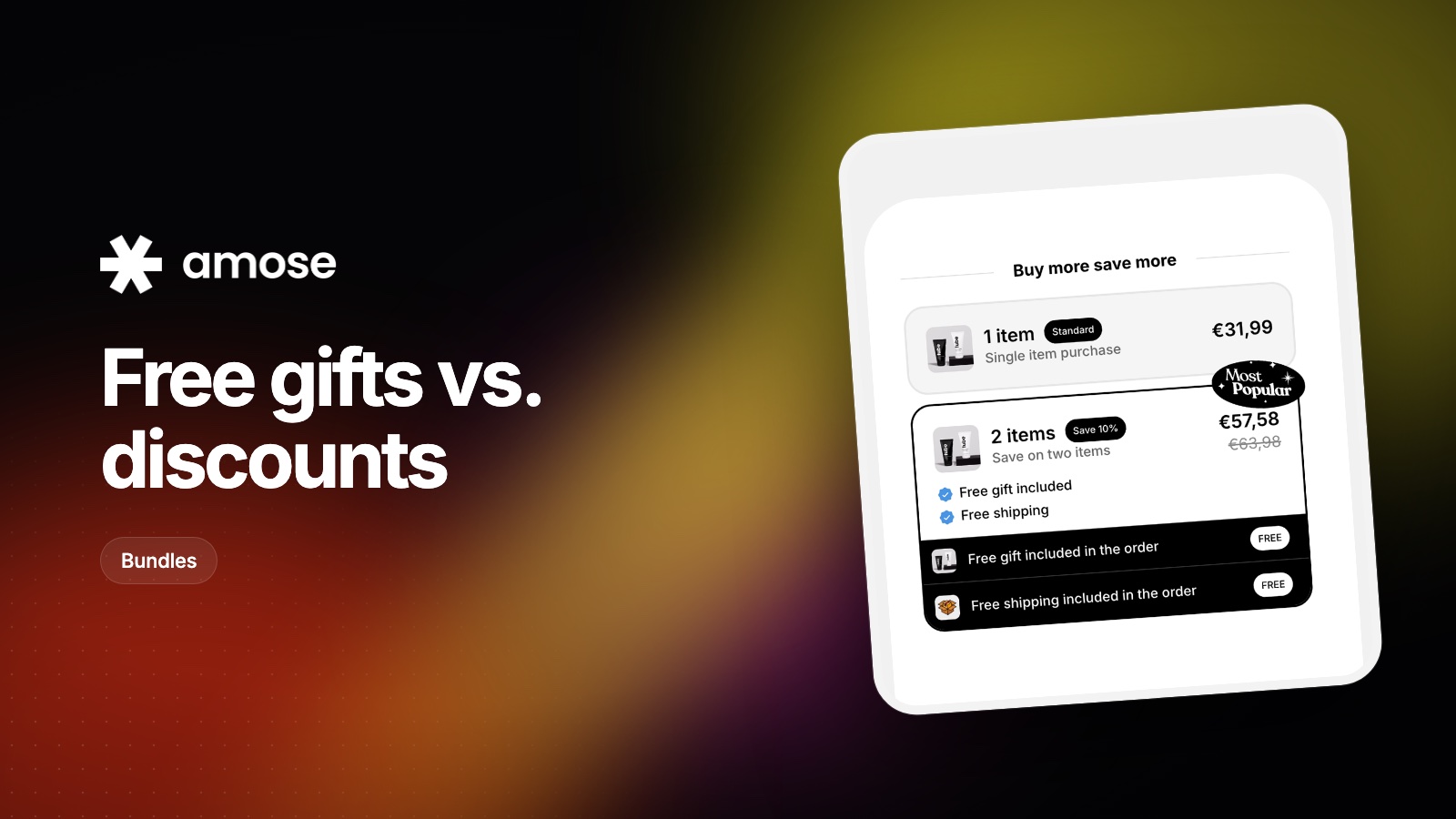
When a free gift beats a percentage off, and how progressive gifts push shoppers to the bigger bundle.
Read article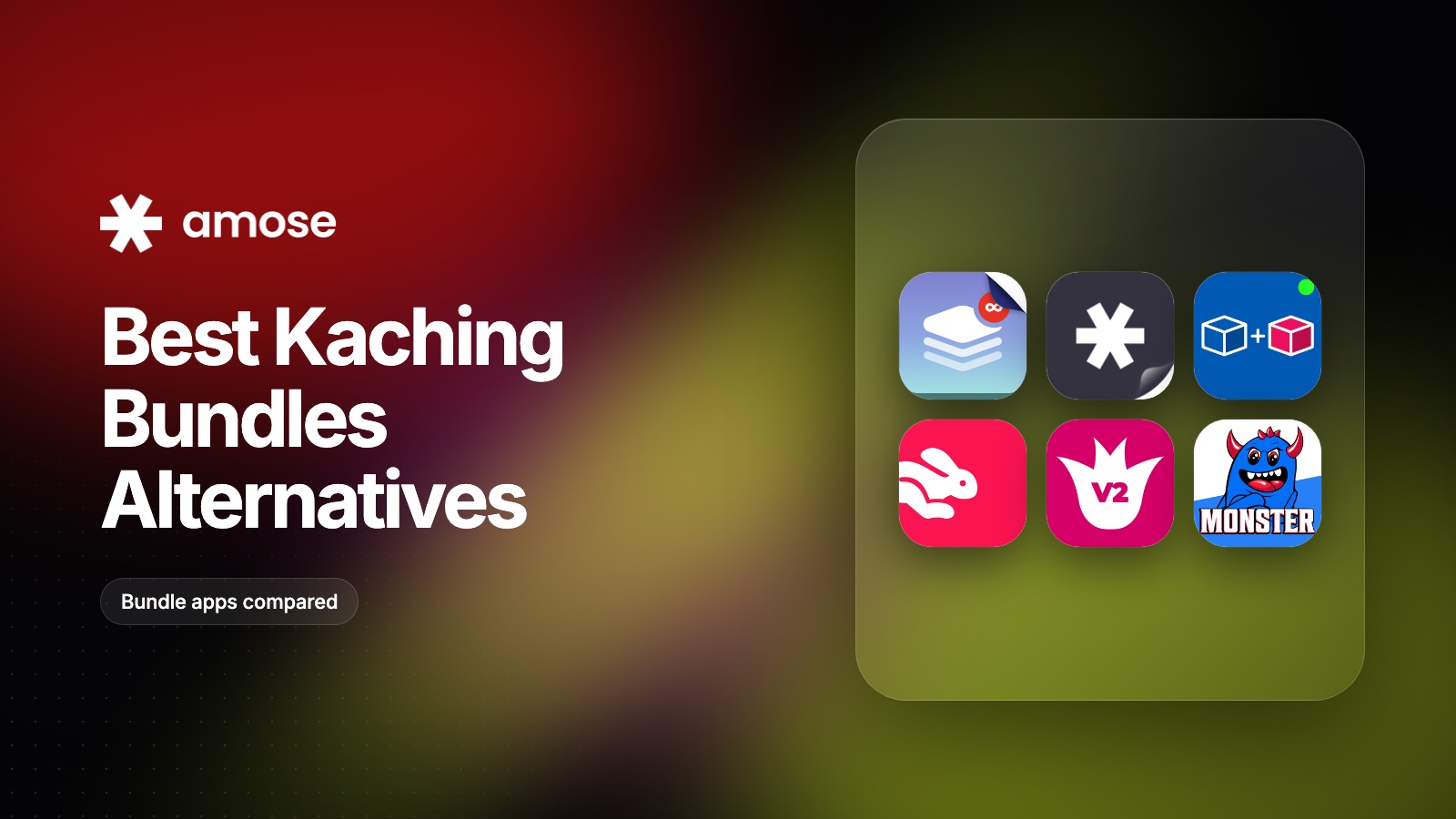
Here are five Kaching Bundles alternatives, compared on pricing and what each one does best.
Read article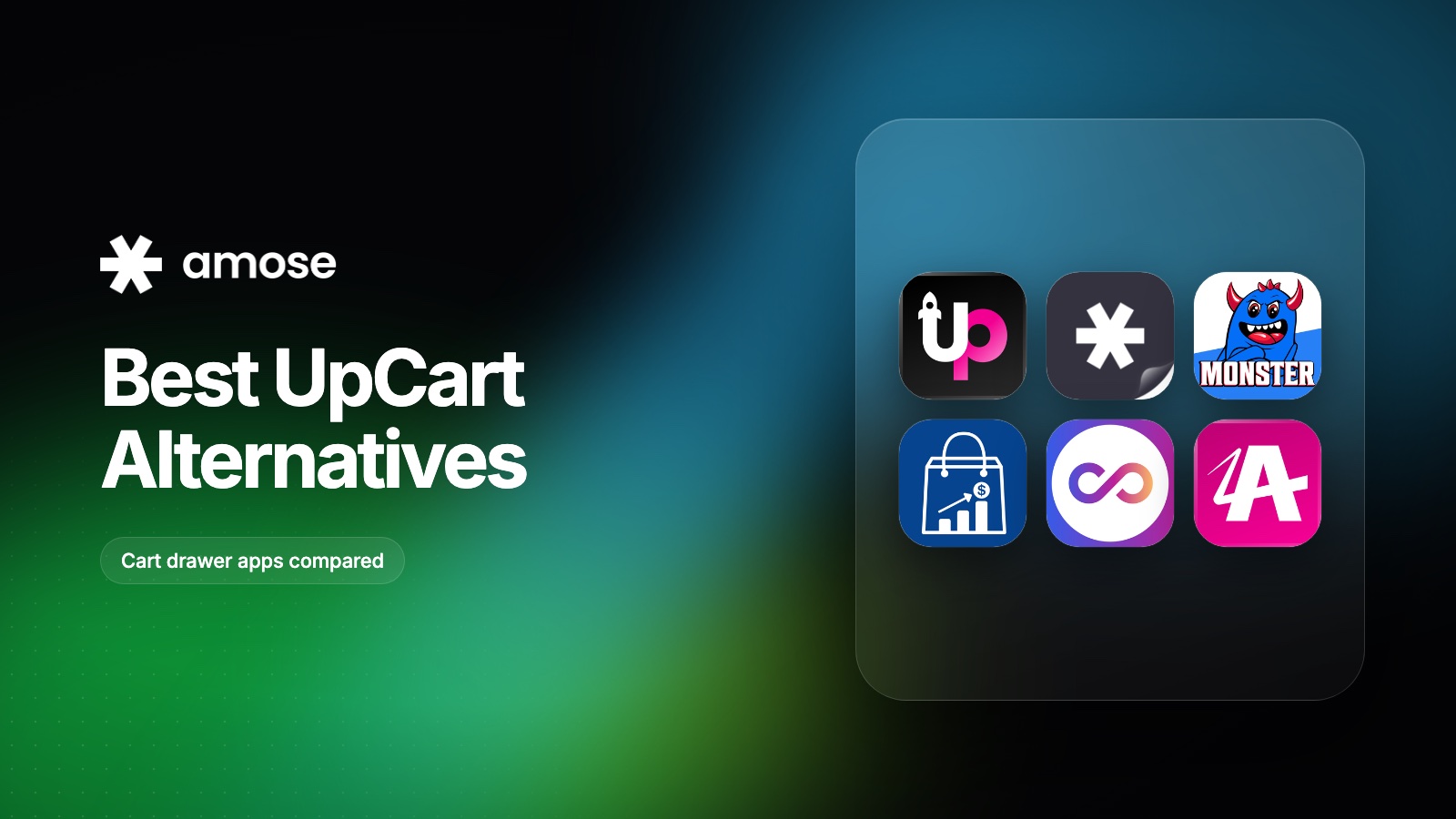
UpCart is one of the most popular cart drawers on Shopify. If its order-based pricing or feature set isn't right for you, here's what else to consider.
Read articleInstall Amose on Shopify and start selling more in minutes.